

Design Thinking for Enterprise AI
Turning problems into opportunities through human-centred design — from discovery through to validated prototypes.
Why Design Thinking is important?
Design Thinking offers a structured framework for problem-solving that places the needs and experiences of users at the forefront. By adopting a human-centred approach, Design Thinking helps organisations gain a deeper understanding of their users, uncover unmet needs, and identify innovative solutions. It promotes creativity, collaboration, and empathy, leading to more meaningful and impactful outcomes. Design Thinking encourages experimentation, iteration, and continuous improvement, allowing for the development of user-centric products, services, and experiences. Ultimately, Design Thinking enables organisations to drive innovation, enhance customer satisfaction, and stay ahead in a rapidly evolving market.
Let’s reinvent the way of solving problems
Design Thinking is a problem-solving approach that focuses on understanding the needs and desires of users to create innovative and effective solutions. It involves empathising with users, defining the problem, generating ideas, prototyping, and testing iteratively. Design Thinking encourages collaboration, creativity, and a human-centred approach to design, aiming to deliver products, services, or experiences that truly address user needs. It emphasises the importance of experimentation, feedback, and iteration to continuously refine and improve solutions. By applying Design Thinking principles, organisations can gain deeper insights, generate breakthrough ideas, and create meaningful experiences for their users.
Human-centred approach to innovation
Collaboration, creativity, and empathy at the core
Experimentation, feedback, and continuous iteration
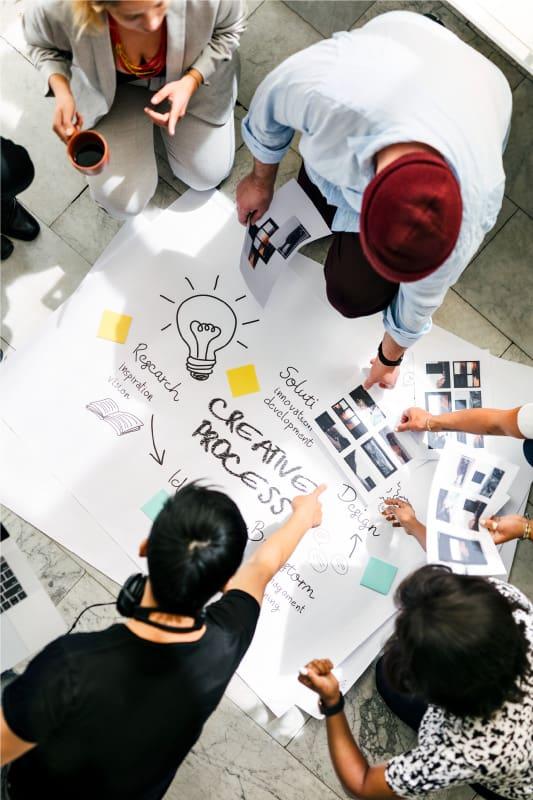
“Design thinking is a human-centered approach to innovation that draws from the designer’s toolkit to integrate the needs of people, the possibilities of technology, and the requirements for business success.”
Our Design Thinking Process
Design thinking combines empathy, creativity, and rigour to develop innovative, human-centred solutions. At Humint Labs, we follow a systematic and iterative five-stage framework — empathise, define, ideate, prototype, and test — to uncover deeper insights and build products that truly resonate with users.

Empathise
User research, personas, empathy maps, and shadowing to understand the user’s perspective, needs, and motivations.
Define
Problem statements, point-of-view statements, and affinity diagrams to clearly articulate the challenge from the user’s perspective.
Ideate
Brainstorming, mind mapping, sketching, and SCAMPER techniques to generate a wide range of creative solutions and approaches.
Prototype
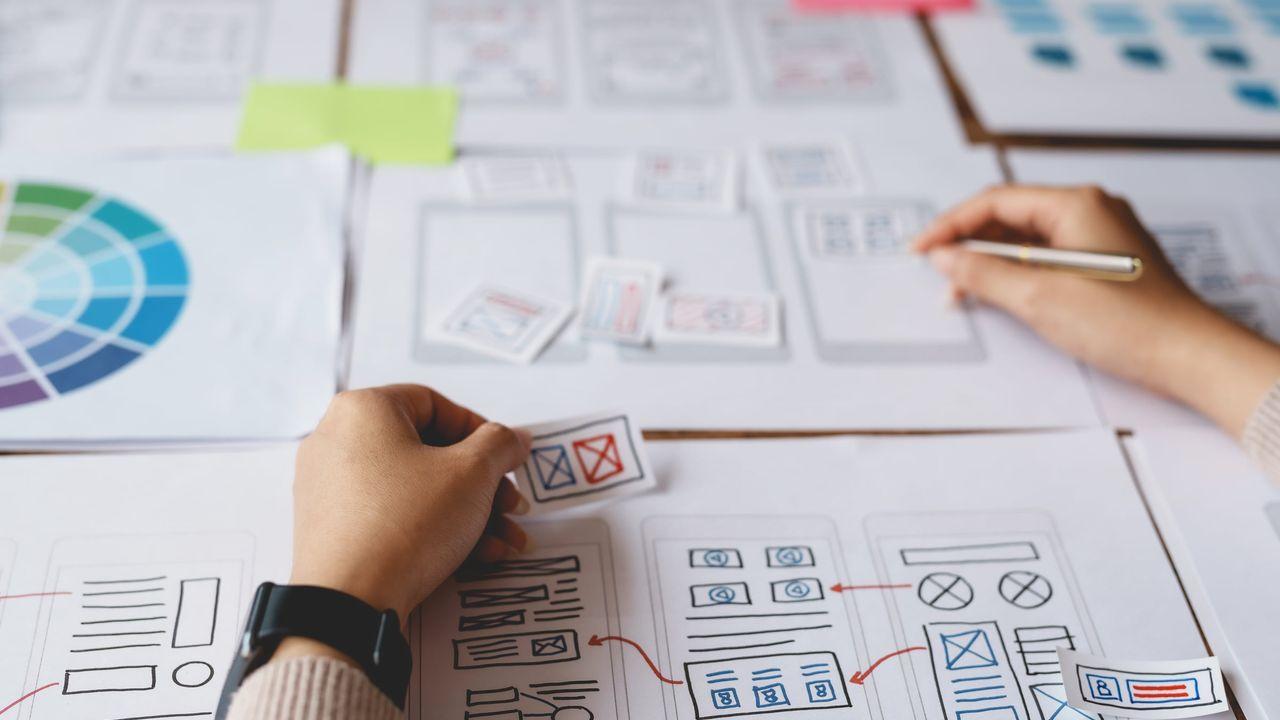
Sketches, wireframes, storyboards, and hi/lo fidelity prototypes to test ideas and get early feedback before committing to full development.
Test
User testing, A/B testing, usability testing, and surveys to validate designs and iterate based on real user feedback.