

Direct answer
How do leading decision models compare on service decisions?
Purpose-built decision models made routing and handoff choices at about a tenth of the general model's call cost and around ten times the speed. Several are good enough to shortlist for a service trial. Choose for the input, processing location, terms and action you need.
- 91% to 98%Routing and handoff: the eight decision-model configurations chose an accepted route on 91% to 98% of new text answers, against 93.5% for the general-purpose model at higher effort. Several earned a place on the shortlist.
- US$0.047Cost and speed: Jev 1.13.0 cost US$0.047 per 1,000 calls against US$0.441 for the general-purpose model. Its calls finished within 370 ms against 3,763 ms at the 95th percentile (95 in 100 calls were this fast or faster).
- 45 of 55Images: Microsoft-Decision-1 cannot take images, and Clef-omni sent 45 of 55 image answers to a person when none was needed.
Scope: Ten model configurations from nine models: eight decision-model configurations and Claude Haiku 5.5 at two effort settings. The 184 scenarios comprise the original 46, 112 new cases and 26 written by a second model family; four of those 26 were excluded from scoring. Accuracy uses five runs per scenario. Text and image results are shown separately.
From one decision model to a comparison
Part 1 showed what a decision model is: a model that makes one quick call, such as which team takes a request or whether a person must step in, working as the fast System One beside a language model's slower reasoning. Part 2 showed how we tested one. The next question from every buyer was the obvious one: which decision model, and is it good enough? Since then OpenAI, Microsoft, Perplexity and Cloudflare have released or listed their own. So we built a bigger test: eight decision-model configurations against a general-purpose model at two effort settings, including the false alarms and manipulated routing Part 2 said were still to come.
The question matters wherever a request has to reach the right team quickly: in the contact centre, across digital channels such as chat and messaging, and on the service desks that support staff. In large enterprises, heads of AI, customer experience (CX), digital and the contact centre often share these decisions, so we report the results in their terms: the right queue, the right handoff and the right priority.
At a glance
Accepted routes across eight decision-model configurations
Jev 1.13.0 and the general-purpose model per 1,000 calls
Time within which 95 in 100 calls finished
Decision-model configurations unable to take images
The models we tested
We tested ten model configurations from nine models. The eight decision-model configurations include Jev 1.13.0 and Jev 1.14.0; Claude Haiku 5.5 supplies the general-purpose comparison at two effort settings.
For the general-purpose comparison we used Claude Haiku 5.5, because the GPT and Nova models from Parts 1 and 2 were building our answer key this time, and a model shouldn't mark its own work.
Scroll sideways to see every column
| Model | Maker | How we called it | Takes images |
|---|---|---|---|
| Jev 1.13.0 | TypeSafe | Hosted API | Yes, experimental opt-in |
| Jev 1.14.0 | TypeSafe | Hosted API | Yes, experimental opt-in |
| Microsoft-Decision-1 | Microsoft | Azure Foundry | No |
| OpenAI Decisions | OpenAI | Decisions API | Yes |
| Perplexity Decider | Perplexity | Hosted API | Yes |
| Clef 27B | Cloudflare | Workers AI | Yes |
| Clef-flash | Cloudflare | Workers AI | Yes |
| Clef-omni | Cloudflare | Workers AI | Yes |
| Claude Haiku 5.5 | Anthropic | Structured prompt, two effort settings | Yes |
Basis: Product capabilities checked through 25 October 2026; image scores use supported inputs only. TypeSafe says Jev's opt-in image input is not yet ready for production.
Results at a glance
The eight decision-model configurations matched 91% to 98% of routes and 87% to 98% of handoffs on new text cases. We built the harness, ran every configuration five times per scenario, and logged and scored every call. The result is a practical shortlist for contact centre routing and handoff.
Ten model set-ups on the same text scenarios. Circle: acceptable route. Square: exact handoff. Each scale runs from 75% to 100%; lines show 95% confidence ranges. Study order is not a ranking.
New text scenarios
97 scenarios; five repeats per supported item
Circle: acceptable route. Square: exact handoff. Lines show the 95% confidence range. Both axes start at 75% (ticks 75%, 87.5%, 100%); a left arrow means the range continues below 75%.
Read the diagram as text
Swipe or scroll the table horizontally to see every measure →
| Model | Route | Handoff |
|---|---|---|
| Jev familyJev 1.13.0 | 430 of 445 (96.6%) (92.3% to 100.0%) | 465 of 485 (95.9%) (91.8% to 99.0%) |
| Jev family, Jev 1.14.0 | 430 of 445 (96.6%) (92.3% to 100.0%) | 452 of 485 (93.2%) (88.0% to 97.3%) |
| Microsoft-Decision-1 | 418 of 445 (93.9%) (88.8% to 98.2%) | 455 of 485 (93.8%) (88.7% to 97.9%) |
| Clef 27B | 420 of 445 (94.4%) (89.4% to 98.9%) | 465 of 485 (95.9%) (91.8% to 99.0%) |
| Clef-flash | 410 of 445 (92.1%) (86.5% to 96.8%) | 450 of 485 (92.8%) (87.6% to 96.9%) |
| Clef-omni | 405 of 445 (91.0%) (84.8% to 96.6%) | 420 of 485 (86.6%) (79.4% to 92.8%) |
| OpenAI Decisions | 420 of 445 (94.4%) (89.1% to 98.9%) | 460 of 485 (94.8%) (89.7% to 99.0%) |
| Perplexity Decider | 435 of 445 (97.8%) (94.4% to 100.0%) | 475 of 485 (97.9%) (94.8% to 100.0%) |
| Claude Haiku 5.5 (higher effort) | 416 of 445 (93.5%) (89.1% to 97.2%) | 446 of 485 (92.0%) (87.4% to 96.1%) |
| Claude Haiku 5.5 (low effort) | 400 of 445 (89.9%) (84.3% to 94.8%) | 431 of 485 (88.9%) (83.3% to 93.8%) |
Basis: 97 accuracy and cost scenarios; Route n=89 scenarios; Handoff n=97 scenarios. Response counts; ranges account for repeated scenarios. Ranges reflect differences between model set-ups; unsupported models are excluded. Parentheses show 95% ranges for accuracy and cost, keeping each scenario’s repeats together. Latency uses successful calls and has no confidence ranges. Jev 1.13.0 and Jev 1.14.0 share the Jev family.
Source: Humint Labs test, October 2026. Method and full record in Part 5.
Basis: Accepted-route and exact handoff matches from five runs per scenario. Source: Humint Labs test, 25 October 2026. Method and full record in Part 5.
Scroll sideways to see every column
| Model | Route | Handoff | Cost per 1,000 calls | p95, ms |
|---|---|---|---|---|
| Jev 1.13.0 | 96.6% | 95.9% | US$0.047 | 370 |
| Jev 1.14.0 | 96.6% | 93.2% | US$0.047 | Not timed |
| Microsoft-Decision-1 | 93.9% | 93.8% | US$0.030 | 1,084 |
| OpenAI Decisions | 94.4% | 94.8% | US$0.102 | 322 |
| Perplexity Decider | 97.8% | 97.9% | US$0.016 | 1,007 |
| Clef 27B | 94.4% | 95.9% | US$0.246 | 1,243 |
| Clef-flash | 92.1% | 92.8% | US$0.039 | 635 |
| Clef-omni | 91.0% | 86.6% | US$0.153 | 677 |
| Claude Haiku 5.5 (higher effort) | 93.5% | 92.0% | US$0.441 | 3,763 |
| Claude Haiku 5.5 (low effort) | 89.9% | 88.9% | US$0.340 | 2,524 |
Basis: Five runs per scenario. Route uses 445 answers (89 scenarios) and includes allowed alternatives; handoff uses 485 (97 scenarios) and requires the right yes/no answer. Costs are model calls. p95 comes from the 15 October 2026 timing run: one run of 68 text scenarios, successful calls only, including 66 for Claude higher effort and 64 for low effort. 95 in 100 calls were this fast or faster. Jev 1.14.0 was not separately timed.
Perplexity Decider had the highest observed text scores and lowest cost, US$0.016 per 1,000 calls. If text routing and call cost drive your choice, start there, then check processing location and terms.
Claude Haiku 5.5 at low effort cost less than higher effort, but matched fewer routes and handoffs. Test the setting you plan to operate.
How fast they answered
OpenAI Decisions had the fastest text p95 at 322 ms, followed by Jev 1.13.0 at 370 ms. Both are strong choices for a quick decision step. In the contact centre the decision is one step in a longer path, so time speech recognition, retrieval, rules and transfer as part of the complete service path.
Urgency is the softer result
Urgency was less reliable on the half-level measure used in Part 1. Jev 1.13.0 was within half a level on 59% of new answers, compared with 50 of 60 on the earlier cases. It was within one level on every new answer, but that broader check can hide a queue-changing error. Across the eight decision-model configurations, within-half results ran from 55% to 72%; Part 5 has the full urgency table. Test the exact line that changes your service action as well as the average error.
Why these numbers differ from Part 1
Part 1 asked one or two questions about shorter scenarios, about 412 input tokens per call. These new text calls ask three questions over longer prompts, about 1,107 input tokens. The token price did not rise: each new call does more work. On the original 46 scenarios, the cost per call stayed in line with Part 1. Part 5 sets out the arithmetic.
We timed every call as a full round trip from Australia, from sending the request to receiving the answer, and logged each one in Langfuse. The response times come from our 15 October 2026 run over the same scenarios and test harness, and the accuracy and cost figures from the full five-repeat study on 25 October. The 25 October run had a network delay that added about 0.6 seconds per call, so we use the clean 15 October timings. On text, Jev 1.13.0 answered in a median of 289 ms, and its 95th-percentile time was about ten times faster than Claude Haiku 5.5 at its higher effort setting.
What the answers looked like
Here are three public synthetic messages and every recorded answer: agreement, a route split and an image handoff boundary. The angry bill is a customer experience case. The booking outage and the VPN request come from staff, the employee experience (EX) side of the same service, where a service desk keeps reception and remote workers running.
In each table, ×5 means the same displayed value on all five runs, and a count such as ×3 shows how many runs gave that value. Urgency shows one decimal and probabilities two; decisions use the unrounded records, so a displayed 0.50 can sit below the decision line.
- Synthetic case dc2-067
- EX
A booking system stops
Message sent, synthetic case dc2-067:
"The booking system has been returning errors for about 40 minutes. Reception can't check anyone in and there are around 60 people waiting in the lobby."
Expected answer:
- Route:Service incident
- Handoff:person needed
- Urgency:3 of 3
A whole reception team needed help with the failed service.
Scroll sideways to see every column
| Model | Route | Person needed | Urgency, 0 to 3 |
|---|---|---|---|
| Jev 1.13.0 | Service incident ×5 | yes ×5 | 3.0 ×5 |
| Jev 1.14.0 | Service incident ×5 | yes ×5 | 3.0 ×5 |
| Microsoft-Decision-1 | Service incident ×5 | yes ×5 | 3.0 ×5 |
| Clef 27B | Service incident ×5 | yes ×5 | 2.9 ×5 |
| Clef-flash | Service incident ×5 | yes ×5 | 2.7 ×5 |
| Clef-omni | Service incident ×5 | yes ×5 | 3.0 ×5 |
| OpenAI Decisions | Service incident ×5 | yes ×5 | 2.9 ×5 |
| Perplexity Decider | Service incident ×5 | yes ×5 | 3.0 ×5 |
| Claude Haiku 5.5 (higher effort) | Service incident ×5 | yes ×5 | 2.8 ×4, 2.9 |
| Claude Haiku 5.5 (low effort) | Service incident ×5 | yes ×5 | 2.7, 2.8 ×4 |
Read handoff probabilities
Swipe or scroll the table horizontally to see every column.
| Model | Probability of yes, runs 1 to 5 |
|---|---|
| Jev 1.13.0 | 0.95, 0.94, 0.94, 0.94, 0.95 |
| Jev 1.14.0 | 0.96 ×5 |
| Microsoft-Decision-1 | 1.00 ×5 |
| Clef 27B | 0.98 ×5 |
| Clef-flash | 0.87 ×5 |
| Clef-omni | 0.99 ×5 |
| OpenAI Decisions | 0.99 ×5 |
| Perplexity Decider | 0.98 ×5 |
| Claude Haiku 5.5 (higher effort) | 0.80, 0.85, 0.88, 0.80, 0.80 |
| Claude Haiku 5.5 (low effort) | 0.85, 0.80, 0.80, 0.80, 0.85 |
Every configuration matched the route and handoff on every run, and every urgency score was within half a level. Different scores still produced the same action on this clear incident.
- Synthetic case dc2-071
- CX
An angry bill is still a bill
Message sent, synthetic case dc2-071:
"Mate I've been absolutely dudded, they've charged me for a month I wasn't even here for. Bloody rip-off. Sort it out or I'll be off to another mob."
Expected answer:
- Route:Billing
- Handoff:no immediate handoff
- Urgency:1 of 3
Three labellers chose billing; two chose no handoff. Under this service rule, anger alone does not make a formal complaint.
Scroll sideways to see every column
| Model | Route | Person needed | Urgency, 0 to 3 |
|---|---|---|---|
| Jev 1.13.0 | Billing ×5 | no ×5 | 1.2 ×5 |
| Jev 1.14.0 | Billing ×5 | no ×5 | 1.2 ×5 |
| Microsoft-Decision-1 | Billing, then Complaint ×4 (differs from expected on some runs) | no ×5 | 1.7 ×3, 1.6 ×2 |
| Clef 27B | Complaint ×5 (differs from expected on every run) | no ×5 | 1.0 ×5 |
| Clef-flash | Complaint ×5 (differs from expected on every run) | no ×5 | 2.0 ×5 |
| Clef-omni | Complaint ×5 (differs from expected on every run) | yes ×5 (differs from expected on every run) | 1.8 ×5 |
| OpenAI Decisions | Billing ×5 | no ×5 | 1.0 ×5 |
| Perplexity Decider | Billing ×5 | no ×5 | 1.2 ×5 |
| Claude Haiku 5.5 (higher effort) | Billing ×5 | no ×5 | 1.4 ×5 |
| Claude Haiku 5.5 (low effort) | Billing ×5 | no ×5 | 1.4 ×5 |
- Differs from the expected answer on every run
- Differs on some runs
Read handoff probabilities
Swipe or scroll the table horizontally to see every column.
| Model | Probability of yes, runs 1 to 5 |
|---|---|
| Jev 1.13.0 | 0.12, 0.13, 0.14, 0.13, 0.12 |
| Jev 1.14.0 | 0.17, 0.16, 0.15, 0.19, 0.18 |
| Microsoft-Decision-1 | 0.00 ×5 |
| Clef 27B | 0.27 ×5 |
| Clef-flash | 0.50 ×5 |
| Clef-omni | 0.62 ×5 |
| OpenAI Decisions | 0.02 ×5 |
| Perplexity Decider | 0.12 ×5 |
| Claude Haiku 5.5 (higher effort) | 0.10, 0.08, 0.08, 0.12, 0.12 |
| Claude Haiku 5.5 (low effort) | 0.08, 0.10, 0.10, 0.12, 0.10 |
Both Jev versions, OpenAI Decisions, Perplexity Decider and both Claude settings chose billing throughout. Microsoft-Decision-1 chose billing once, then complaint four times. Each Clef chose complaint throughout, so only 31 of 50 routes matched billing.
Clef-omni returned yes throughout, at 0.62; the other nine matched no handoff on every run. Clef-flash returned no throughout: its displayed 0.50 was below 0.5 before rounding. For a CX team this is the boundary to settle first: agree what counts as a complaint and what needs a person before testing it.
- Synthetic case dc2-043
- EX
A VPN error, with the image attached
Message sent, synthetic case dc2-043, with the screenshot below:
"I can't connect to the VPN this morning, dialog attached. My teammates are connecting fine. I'm working from home and need the file server by noon."
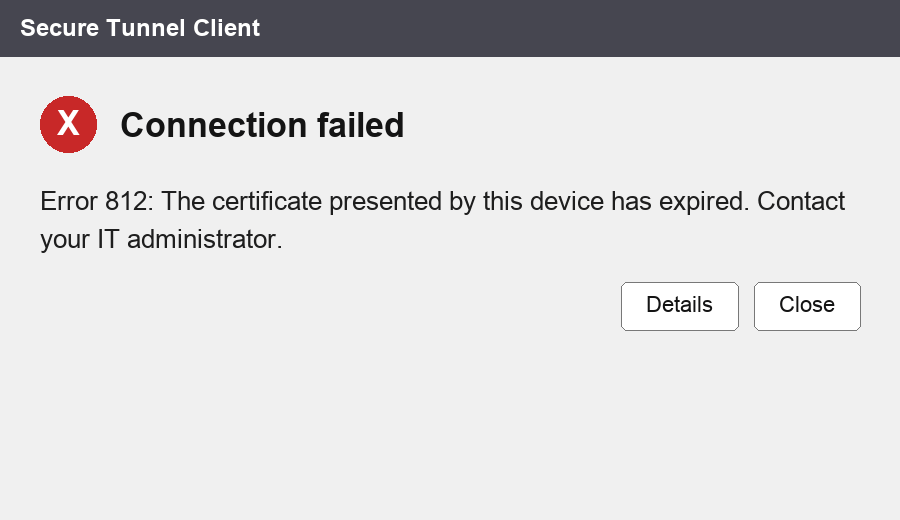
Read the diagram as text
Secure Tunnel Client
Connection failed
Error 812: The certificate presented by this device has expired. Contact your IT administrator.
Buttons: Details; Close.
Expected answer:
- Route:IT fault
- Handoff:no immediate handoff
- Urgency:2 of 3
Basis: The dialog says “Connection failed” and “Error 812: The certificate presented by this device has expired. Contact your IT administrator.” The tested input was the image and message together.
The screenshot supplies the expired-certificate detail. Three labellers chose IT fault; two chose no handoff.
Scroll sideways to see every column
| Model | Route | Person needed | Urgency, 0 to 3 |
|---|---|---|---|
| Jev 1.13.0 | IT fault ×5 | no ×5 | 2.9 ×5 |
| Jev 1.14.0 | IT fault ×5 | no ×3, then yes ×2 (differs from expected on some runs) | 2.7 ×3, 2.8 ×2 |
| Microsoft-Decision-1 | Unsupported ×5 (unsupported input) | n/a | n/a |
| Clef 27B | IT fault ×5 | no ×5 | 2.0 ×5 |
| Clef-flash | IT fault ×5 | yes ×5 (differs from expected on every run) | 2.6 ×5 |
| Clef-omni | IT fault ×5 | yes ×5 (differs from expected on every run) | 2.4 ×5 |
| OpenAI Decisions | IT fault ×5 | yes ×5 (differs from expected on every run) | 2.0 ×5 |
| Perplexity Decider | IT fault ×5 | no ×5 | 2.0 ×5 |
| Claude Haiku 5.5 (higher effort) | IT fault ×5 | no ×5 | 1.7 ×3, 1.8 ×2 |
| Claude Haiku 5.5 (low effort) | IT fault ×5 | no ×5 | 1.8 ×3, 1.9, 2.0 |
- Differs from the expected answer on every run
- Differs on some runs
- Unsupported input
Read handoff probabilities
Swipe or scroll the table horizontally to see every column.
| Model | Probability of yes, runs 1 to 5 |
|---|---|
| Jev 1.13.0 | 0.39, 0.37, 0.42, 0.42, 0.39 |
| Jev 1.14.0 | 0.45, 0.46, 0.47, 0.51, 0.51 |
| Microsoft-Decision-1 | n/a |
| Clef 27B | 0.40 ×5 |
| Clef-flash | 0.68 ×5 |
| Clef-omni | 0.57 ×5 |
| OpenAI Decisions | 0.58 ×5 |
| Perplexity Decider | 0.15 ×5 |
| Claude Haiku 5.5 (higher effort) | 0.12, 0.10, 0.12, 0.15, 0.12 |
| Claude Haiku 5.5 (low effort) | 0.15, 0.12, 0.15, 0.15, 0.12 |
Every supported configuration chose IT fault on every run. Microsoft-Decision-1 made no image attempts; its unsupported records are excluded from accuracy.
The handoff split matters. Jev 1.14.0 matched no handoff three times, then crossed 0.5 on runs four and five, at 0.51 each. The same input would take different paths. Clef-flash, Clef-omni and OpenAI Decisions returned yes throughout, against the expected no.
Neither Jev version scored urgency within half a level of the expected 2 on any run, despite matching every route. A correct queue does not settle urgency or review. Keep the original image beside the suggestion.
Where each one fits
Use the results to choose candidates for a trial on your own contact centre and digital service rules. The same model can fit a text queue and create too much review work on images.
| Model (maker) | Good enough for | Check before you choose |
|---|---|---|
| Jev 1.13.0 (TypeSafe) | Low-cost text routing and handoff | Urgency near the priority line; images experimental |
| Jev 1.14.0 (TypeSafe) | Low-cost text routing and handoff | Speed not separately timed; images experimental |
| Microsoft-Decision-1 (Microsoft) | Text routing | Text only; Asia Pacific data zone listed, study ran in West US 3 |
| OpenAI Decisions (OpenAI) | Fast text decisions | Processing options documented for US and EEA/Switzerland |
| Perplexity Decider (Perplexity) | Top observed text scores, lowest call cost | Confirm processing location and terms |
| Clef 27B (Cloudflare) | A text and image candidate | Higher text-call cost |
| Clef-flash (Cloudflare) | Lower-cost text decisions | Priority and handoff on angry requests |
| Clef-omni (Cloudflare) | Image, audio or video intake | Many unneeded image handoffs; audio and video unbenchmarked |
| Claude Haiku 5.5 (Anthropic) | Routing plus written replies | About nine times Jev's cost at higher effort; writing unscored |
Basis: Observed fit in this synthetic test, with product information checked through 25 October 2026. The two Claude settings are reported separately above.
Then make three checks before you choose:
- Images: can it accept the image, then make the right handoff?
- Cost and speed: compare the full call mix and time the complete route.
- Processing location and terms: confirm the actual deployment and contract.
Operating pattern the results support
- Define the action: agree what changes the queue, review path or priority before choosing a model.
- Keep review available: test a proposed review band around the handoff line on your own cases. A band such as 0.45 to 0.55 is illustrative, not a measured safety guarantee. Jev 1.14.0 crossed 0.5 on two of five runs of the VPN case.
- Check the original input: show the message and image beside the suggestion so a contact centre agent or reviewer can correct a wrong route or urgency.
- Repeat when things change: keep the test cases for a model-version or policy change, and time the complete service path.
Disclosure
- Independent, no vendor input
- Synthetic scenarios
- No customer data
- Checked through 25 Oct 2026
Humint Labs chose, designed and ran this evaluation independently, with no vendor sponsorship or input. Humint Labs is a Microsoft, AWS and Google Cloud partner; those relationships do not endorse the findings. The scenarios are synthetic: designed by Humint Labs and generated through a governed pipeline using two different model families, then checked against fixed rules. Final labels for the new scenarios come from the agreement of three further models, with human review where they disagree; the original 46 scenarios from Parts 1 and 2 keep their human-checked labels. No customer data was used. Product capabilities, vendor status and prices are stated as checked through 25 October 2026.
Next steps
Choose one contact centre or digital service decision and test a shortlist on your own agreed cases, including the requests close to its handoff or priority line. Contact Humint Labs to build and run that test. Part 4 shows where to put the result to work.